
If you're a wholesaler or off-market investor, your entire edge is finding distressed properties before everyone else does. The deals don't come from MLS. They come from owners who can't sell on MLS, or won't: people who are behind, overwhelmed, absent, or sitting on a property they can't fix.
The good news is that most of those owners leave a public-record trail long before the property ever lists. The bad news is that the trail is scattered across half a dozen government databases, none of them built for investors, none of them talking to each other.
A distressed property is one whose owner is under financial, legal, or physical-condition pressure that motivates a below-market sale. That pressure shows up in public records: tax delinquency, court filings, code enforcement, building inspections, eviction dockets, bankruptcy court. Each source is one slice of distress. Investors who stack multiple slices see motivated sellers the rest of the market can't.
I'm Skyler Bissell. I invest off-market out of Seattle, and I built FlaggedLeads because I got tired of driving neighborhoods to find what's already documented in city databases. Today it tracks distress signals across the Puget Sound: Seattle, Tacoma, Bellevue, Burien, and the surrounding markets. This is the playbook I actually use, and the sources I'd recommend whether or not you ever touch my tool.
What counts as a distressed property
A distressed property is one where the owner is in trouble, financial, physical, or legal, and is more likely than the average homeowner to consider an off-market sale. The categories I look for:
- Financially distressed. Behind on property taxes, mortgage, or HOA dues, or facing collections. Pre-foreclosure is the acute version.
- Condition distressed. Major repairs needed, open code violations, fire damage, long vacancy. The repair cost is more than the owner can or will spend.
- Owner distressed. Probate, divorce, eviction proceedings, bankruptcy, out-of-state owners who've checked out.
- Time distressed. An inherited house nobody wants, a second home someone can't maintain, a rental that's become a burden.
These overlap, and the overlap is the point. The strongest leads are properties where two or three categories stack: a code violation on a probate property owned by someone out of state, for example.
Why public data is the off-market edge
The standard distressed-property playbook is driving for dollars, paid lead lists, and direct mail to absentee owners. It works, but the same lists get sold to every investor in your market. PropStream, BatchLeads, and the foreclosure feeds all run the same queries and hand out the same outputs, so the same couple hundred wholesalers chase the same fifty leads. I keep verified pricing for that whole layer in the best real estate lead generation software roundup, with head-to-heads on PropStream vs DealMachine, FlaggedLeads vs PropStream, and FlaggedLeads vs PropertyRadar.
Public records are different. They're free, refreshed daily by municipalities, and most investors don't aggregate them because the work is unglamorous. Pulling, normalizing, and cross-referencing the data is the friction, and the friction is the opening. Spend an hour a week reading public records, or use a tool that does it for you, and you'll see distress signals the bulk-data vendors haven't packaged yet.
The 7 public data sources for distressed properties
Ranked by signal strength. Some are city-level, some county, some state. None require a license to read.
1. Code violations and building inspections
The clearest signal of an overwhelmed owner: code enforcement has filed against the property and the case is still open. Vacant-building orders, emergency repair orders, structural failures, land use violations, these are owners under direct pressure from the city with a financial penalty attached.
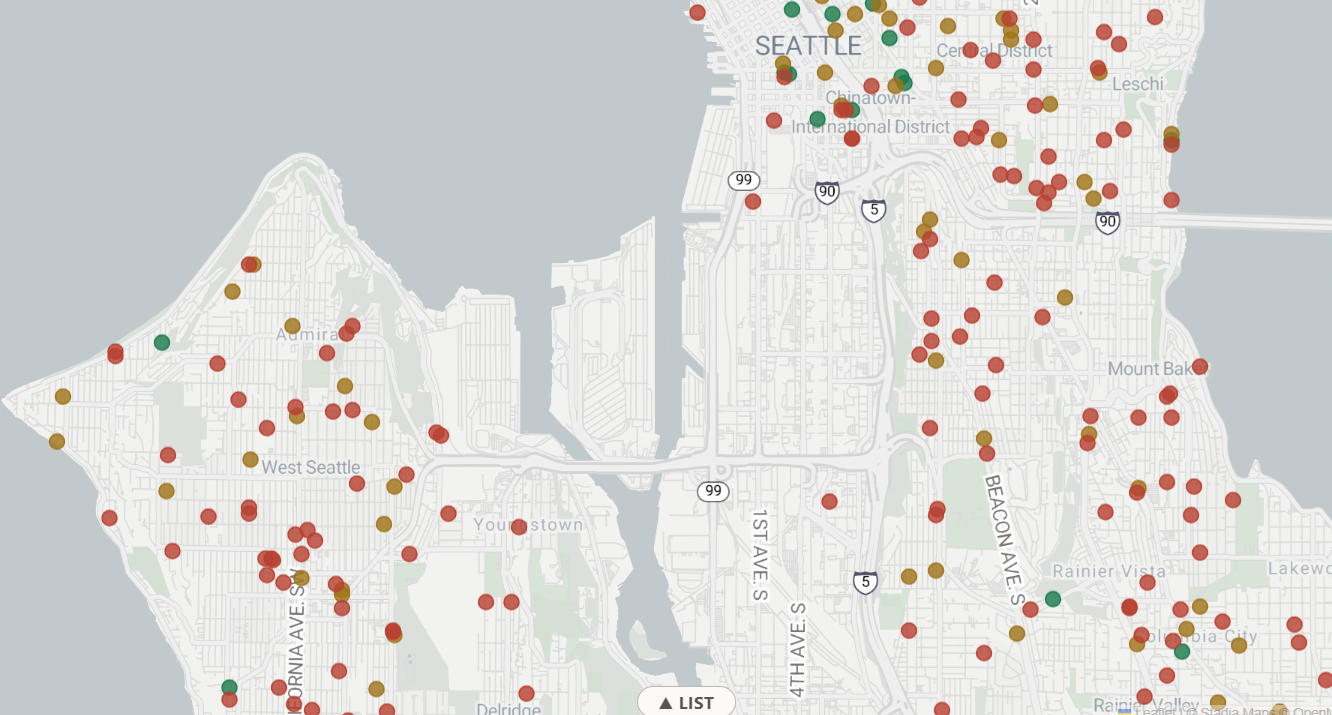
Most cities publish this through open data portals, and it's daily-fresh and free at the source. The catch is volume and noise: across our markets there are 83,788 violations on 46,778 properties, but most of those properties have a single, minor, closed case that means nothing. The signal is in the type and the stacking. Vacant-building, emergency, and multiple violations on one property point to a motivated seller; a construction permit with active work points the opposite way. The full breakdown is in the building and housing code violations guide, and the plain-English starting point is what code violations are. When you're ready to pull a list, here's how to get code violation leads for any city.
2. Tax delinquency lists
County treasurers publish lists of properties with unpaid taxes, usually annually before the tax sale. Two or three years delinquent is where forfeiture gets real, and that's the sweet spot.
The tradeoff: every wholesaler in your market knows about tax lists. They cost $50 to $200 from the county and everyone already has them. Combining tax delinquency with a less-saturated signal, like code violations, is what surfaces the underserved leads.
3. Pre-foreclosure and notice of default filings
When a lender starts foreclosure, it files a Notice of Default at the county recorder. That filing is public, and the window from filing to auction is usually three to six months, enough time to reach the owner and structure a deal.
Pre-foreclosure data is heavily commercialized, and you can pull it free from the recorder if you can stand the search interface. The bigger issue is timing: by the time a default is filed, the owner has been in trouble for months and every foreclosure investor sees the same record. It's a strong signal that arrives late, which is the whole argument in code violations vs pre-foreclosure leads and in the broader case for leading versus lagging indicators.
4. Probate court filings
When an owner dies, the property enters probate, and the court appoints an executor who often wants to liquidate quickly. Heirs don't always want the house, and probate carries holding costs. Filings are public at the county clerk, though online access is hit or miss. High signal, low volume: fewer leads than tax delinquency, higher conversion than driving for dollars.
5. Driving for dollars, augmented by apps
The classic method: drive neighborhoods, flag distressed-looking houses, look up the owner. Apps like DealMachine and PropertyRadar automate the tagging and skip-trace. The full method, route planning through follow-up, is in how to drive for dollars.
Honest tradeoff: it works, but it doesn't scale. You're capped by the hours you can physically drive, and a good half-day route surfaces maybe three to five real distress cases. A public-data query returns a market-wide list in seconds. For me, driving became impossible after my kid was born. That's literally why FlaggedLeads exists, and it's the case I make in code violations vs driving for dollars.
6. Eviction filings
Landlord-side distress. Multiple eviction filings on one property in a twelve-month window means either tenant-turnover problems or a landlord who can't manage the asset, and both correlate with willingness to sell. Eviction data sits at the county clerk. Volume is high, so the signal sharpens when you filter to repeat filings on the same parcel.
7. Bankruptcy filings
Personal bankruptcy filings include real estate assets. Chapter 7 is liquidation, Chapter 13 is restructuring, and either can produce a motivated sale. Bankruptcy is federal, searchable through PACER for a small per-page fee. Low volume, very specific signal.
How to stack signals for the strongest leads
One signal alone is noise. Across our markets, more than 1,600 properties carry a vacant-building violation, a natural starting point for building a vacant property list from public records, though most aren't actionable on their own. But a property with a vacant-building violation and an out-of-state owner and eighteen months of unpaid taxes? That's three independent signals converging. Cross-reference those lists and a market-wide pile drops to maybe five or fifteen properties. Each one is a real conversation.
The reason it works isn't a magic conversion rate, and I won't pretend to one. It's simpler: each independent signal you add shrinks the list and raises the odds that the owner behind the address is actually under pressure. The data behind each distress signal shows how often distress clusters this way. About a third of the scored leads in the database carry a second public record on top of the violation, more than 4,700 of them also showing up in 311 complaints. Stacking is just a way to rank which of those overlaps to work first. That's why list-stacking beats any single source. Each signal in the stack has its own strengths and its own failure modes, all catalogued in the property distress signals guide.
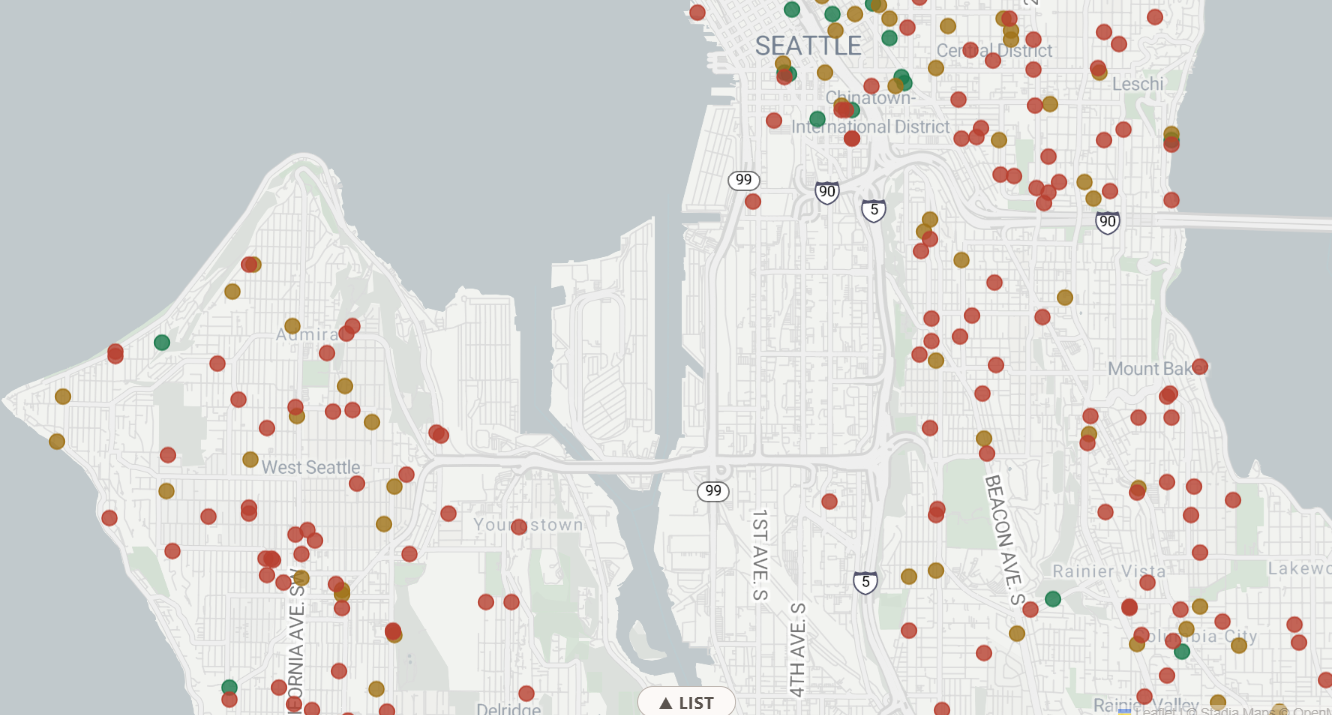
The hard part is the cross-referencing. You have to match addresses across databases that each format them differently. That's the work most investors skip, and the reason public-data-savvy investors find deals the rest never see.
Where each source falls short
Agent networks offer another route: a pocket listing may have restricted marketing or distribution, depending on the seller's instructions and applicable rules. Public-record sourcing begins with a property record and still requires finding out whether the owner wants to sell. Keep those two channels separate when measuring your lead flow.
| Source | Limitation |
|---|---|
| Code violations | Owner identity often missing; needs a separate skip trace for the mailing address |
| Tax delinquency | Heavily commercialized, the same list everyone has |
| Pre-foreclosure | Short action window, high competition, and it arrives late |
| Probate | Slow-moving, emotionally sensitive outreach |
| Driving for dollars | Caps at hours per week, doesn't scale |
| Eviction | Distress is about the tenant, not always the owner |
| Bankruptcy | Low volume, requires PACER fees or a paid aggregator |
Every source has a flaw. Wholesalers who lean on one plateau. Investors who combine sources find leads the single-source crowd never sees. The best wholesale lead sources ranks all ten with our numbers on each. And if you would rather pay for a list than assemble one, I priced buying motivated seller leads against the public-records route.
Turning the list into deals
Finding the properties is half the job. The other half is the part most guides skip: what you do with a ranked list once you have it.
Before turning interest into an offer, build a comp-supported after repair value estimate. The worked example separates the finished home's value from repairs, transaction expenses and the amount you can pay.
Cut hard before you spend a dollar. A market-wide list is not the asset; the filtered list is. Drop the closed cases, the construction-only violations, and the single-citation properties (how to build a motivated seller list has the field spec and the drop rules). What's left, recent, open, distress-type, and repeated, is your A-list. The whole advantage of public-data sourcing is that you can afford to be picky.
Skip trace the survivors. Code violations and most public records give you an address, not always a phone number or a current mailing address. Skip trace the top of your list to get owner contact info before you reach out, and if the export has no owner names at all, work it from the addresses.
Personalize, because you can. When your list is a few hundred instead of five thousand, you can reference the specific situation. "I saw the city has an open case on the house" lands very differently than a generic we-buy-houses blast, and it's only possible because you cut the list down first.
Follow up. Distressed owners rarely respond to touch one. A small, sharp list is one you can afford to mail or call four or five times, which is where most deals actually close.
My recommended workflow
If you're starting from scratch and want a repeatable system:
- Set up daily code-violation monitoring for your city, through its open data portal or through FlaggedLeads if you're in one of our markets. This is the freshest signal layer, and here's how to look one up. To assemble a whole city in one pass, follow building a code violation list.
- Pull the county tax-delinquency list annually. Filter to two or more years delinquent.
- Match the two by address. Every property on both is a high-priority lead.
- Add a pre-foreclosure overlay monthly. Three signals stacked equals priority outreach.
- Skip trace the top 50 to 100 and start a direct-mail or call sequence. Track responses somewhere, even a spreadsheet.
- Layer in probate and bankruptcy once the core stack is working, for another five to ten leads a month.
To see what code-violation data looks like in practice, try the free FlaggedLeads map, or browse the live data for Marysville, Mountlake Terrace, Puyallup, Minneapolis, Seattle, Bellevue, Tacoma, Burien, Renton, Shoreline, and Pierce County. The paid version handles steps 1 through 3 automatically: daily ingest, scoring, address normalization, and an absentee-owner overlay.
Frequently asked questions
What is the best way to find distressed properties for free?
Code violations and tax delinquency lists are the two best free sources. Most cities publish code violation data through open data portals, and county treasurers publish tax-delinquent lists annually. Both take some manual cross-referencing but cost nothing at the source. Here's where to find a distressed property list for free.
How do I find distressed properties before they hit MLS?
Distressed properties leave a public-record trail before they list: code violations, tax delinquency, pre-foreclosure filings, probate. Monitor those weekly, stack the signals, and reach out to owners directly. Most properties surface in public records months to years before they ever appear on MLS, if they list at all. The timing case is in leading vs lagging indicators.
Where can I find a list of distressed homeowners?
There's no single list. Distressed homeowners surface across separate databases, county tax records, court filings, code enforcement, bankruptcy court. Building a leads list means pulling from each and combining the results. Paid services aggregate some of it; free sources take more work but deliver fresher data.
Are public records of distressed properties free to access?
Yes. Code violations, tax delinquency, pre-foreclosure filings, probate, eviction, and bankruptcy records are all public in the United States, most of them accessible online. A few systems charge small per-document fees, like PACER for bankruptcy, but the raw data is free in principle.
Is driving for dollars still worth it?
It works, but it doesn't scale, since it caps your lead volume at the hours you can physically drive. For investors short on time, public-data sources produce far more leads per hour. Driving still earns its keep as a verification layer, confirming an address really does look distressed before you mail it.
What are the strongest distress signals to start with?
Open code violations of the vacant-building, emergency, or land-use type, especially when several stack on one property or combine with an out-of-state owner or unpaid taxes. Those are recent, public, and far less worked than the pre-foreclosure and absentee lists everyone else runs.