
I drove for dollars for two years before I built FlaggedLeads. Most weekends I'd grid out a Seattle neighborhood, drive every block, and tag distressed-looking houses on my phone. It worked. I closed a few deals that way. Then my kid was born, my weekends disappeared, and I had to find a way to find leads that didn't require a car.
This is the comparison I wish someone had given me two years earlier. Driving for dollars and code violation data both find off-market distressed properties. They work differently, fail differently, and if you're smart they work together.
Driving for dollars is the practice of physically driving residential neighborhoods looking for visible signs of property distress (overgrown lawns, boarded windows, peeling paint, abandoned vehicles), then looking up the owner and mailing them an offer. Code violation data is the structured equivalent: cities publish records of every violation issued against a property, including vacant building orders, emergency repairs, and land use violations, and investors can pull that data through open data portals or aggregators.
Both produce distressed-property leads. The differences are in volume, speed, scale, and the specific signal they capture.
The Honest Comparison
| Factor | Driving for Dollars | Code Violations |
|---|---|---|
| Lead source | Your eyes | City open data portals (Socrata APIs in most major cities) |
| Volume | 20-30 candidates per half-day route | 12,000+ active records in Seattle alone, updated daily |
| Freshness | Real-time (you saw it today) | ~24-hour lag (city processes new filings daily) |
| Cost | Gas + time + app ($50-100/mo) | Free at source; paid tools add scoring + normalization |
| Setup | Drive a neighborhood | API query or dashboard subscription |
| Scaling | Hours-per-week is the cap | Unlimited (read the whole city in seconds) |
| Visible distress | Strong (you can see junk in the yard) | Indirect (data tells you, you didn't see it yet) |
| Owner verification | Requires skip trace | Requires skip trace |
| Competition | Medium (locals do it) | Very low (data is fragmented; most investors don't pull it) |
| Best for | Confirming a specific property looks bad | Surfacing properties you'd never have driven past |
The honest read: driving wins on visceral confidence, because you saw the house, you know it's distressed. Code violations win on coverage and time-to-list: you find more leads, faster, and you find ones you'd never have driven by.
Where Driving for Dollars Still Wins
A few things public data can't replicate.
Verification. A property with three open code violations might still look fine from the street. Someone might be living there, maintaining the exterior while the legal issues compound. Driving past confirms or denies the distress.
Off-grid properties. Some properties show physical neglect but never get reported. A rural lot, an inherited duplex on a quiet block, a hoarder house that neighbors won't call the city on. Public data won't flag those. Eyeballs will.
Pattern recognition. After enough hours behind the wheel, experienced investors develop a sense for "this whole block is changing" or "this neighborhood is about to turn." That intuition is genuinely valuable and won't come from a database query.
Local presence. Every drive-for-dollars route is also a chance to know your market. The fastest way to learn a city's neighborhoods is to drive them. Even when I stopped driving for leads, I keep driving for context.
Where Code Violations Win
Volume is the obvious one. Around 500 properties in Seattle have an open vacant building case right now. You could not drive past all of them in a year. You can pull the list in seconds.
Documented distress. A property with five open violations across two years isn't "distressed-looking," it's distressed by legal definition. The owner is facing fines, the city is escalating. That's a stronger signal than a guess from the street.
Time-stamped freshness. Violations are filed daily. New vacant building orders, new emergency repairs, new land use violations land in the database every morning. You can see distress as it appears, not on whatever schedule your driving route hits that block.
Out-of-state owners surface naturally. Many of the most motivated sellers are owners who don't live near the property. They have no idea what the house looks like from the street, but the city has been mailing them violation notices for months.
Scoring becomes possible. With structured data, you can rank leads by signal density. A property with one violation is noise. A property with five violations + emergency type + out-of-state owner + recent activity is a high-conviction lead. Driving for dollars gives you a list; data gives you a ranked list.
Stop Pitting Them Against Each Other
The investors getting the best results use both. The framework that works:
- Use code violation data as your top-of-funnel filter. Pull the daily list of new high-signal properties in your area. Sort by distress score.
- Drive the top 10-20 candidates to verify. Convert the data signal into ground truth: does the property actually look distressed?
- Skip trace and mail to the verified subset. Higher response rates because you know the property is both legally distressed (data) AND visibly distressed (eyes).
This is the workflow I use now. Code violations give me a daily 5-15 property shortlist that I'd never have driven past randomly. I drive only those, verify in 45 minutes, skip trace the strongest, and mail.
If you're a pure driving-for-dollars person, code violation data adds a 3-5x coverage multiplier without changing your existing routine. If you're a pure data person, an occasional drive sharpens your conviction. Neither replaces the other. They compound.
For the full breakdown of which violation types carry the strongest signal and how to score them, see Building & Housing Code Violations: The Investor's Guide. For the broader landscape of public-data lead sources beyond code violations, see How to Find Distressed Properties Using Public Data.
Driving for Dollars Apps in 2026
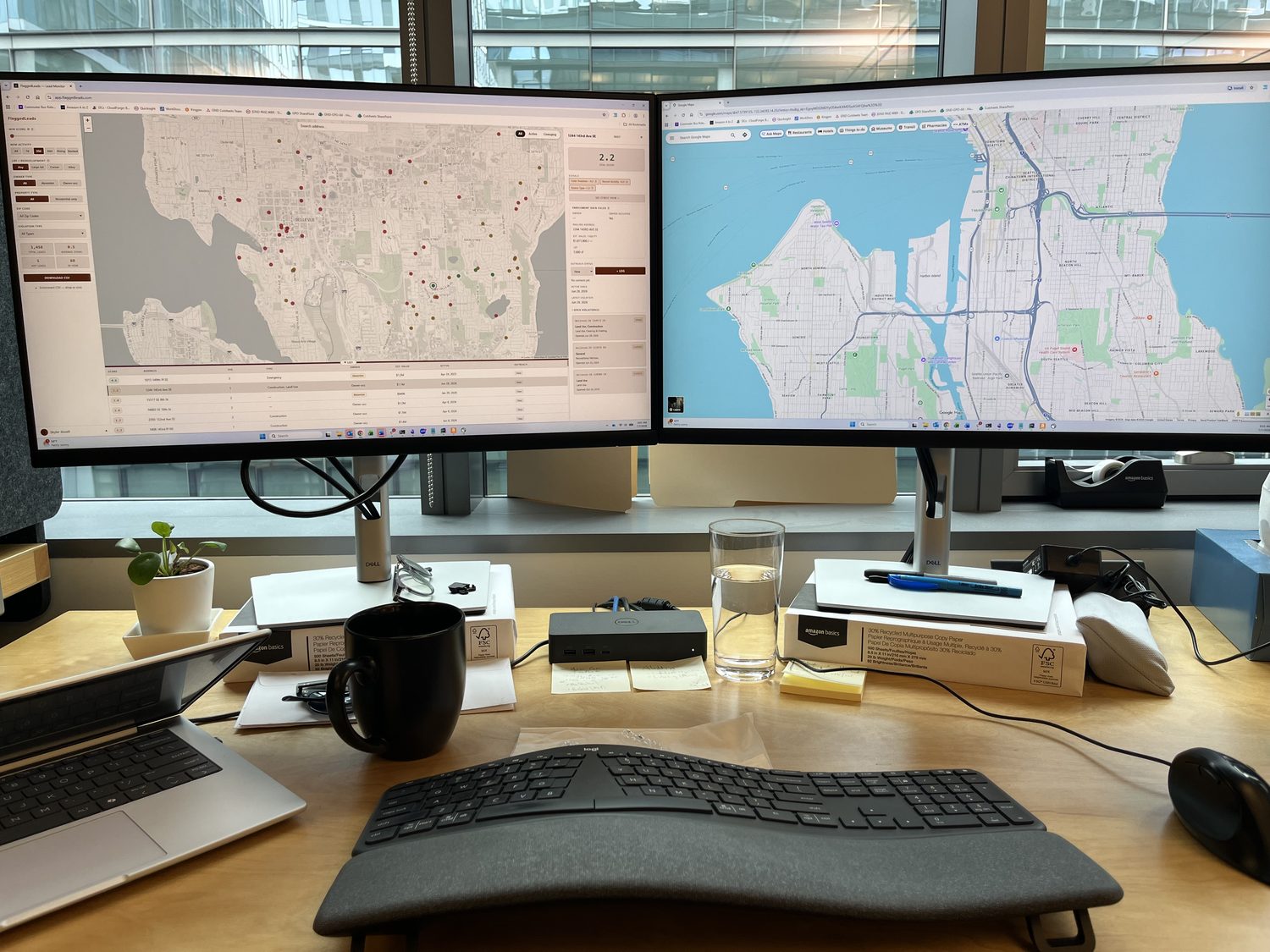
If you're sticking with driving as a primary method, the apps have matured. Quick survey:
- DealMachine. Most popular. Tag a property from your phone, automatic skip trace, mail merge integration. $99-149/seat/mo as of August 2026.
- PropertyRadar. Heavier data overlay; pre-plan routes by tax delinquency or owner type. $119-599/mo as of August 2026, built for the driving-plus-data hybrid.
- Batchdriven (from BatchLeads). Tightly integrated with their lead lists. Best if you're already on BatchLeads.
None of these replace structured city-data feeds. They make driving more efficient; they don't expand the universe of properties you can find. Treat them as one tool, not the whole workflow.
Frequently Asked Questions
Is driving for dollars worth it in 2026?
Yes, but probably not as your only lead source. Driving still works for verification and for surfacing properties that don't show up in public data (off-grid lots, lightly distressed homes, hoarder situations neighbors don't report). But it caps at hours-per-week. Investors with limited time get more volume from public data sources and use driving as a verification layer on the strongest leads.
How does code violation data compare to driving for dollars in volume?
Roughly 100-500x more coverage. A good half-day driving route surfaces 20-30 candidates, of which 3-5 are real distress. Code violation queries return city-wide lists with thousands of entries; high-signal subsets typically include 100-500 properties depending on city size. Volume isn't always the goal, but scaling matters.
Can I use both driving for dollars and code violation data together?
That's the recommended workflow. Pull code violations as your daily top-of-funnel filter, sort by distress score, drive the top 10-20 candidates to verify, then mail to the verified subset. Data finds leads you'd never see; driving confirms the data was right.
Where do I get code violation data?
Most major cities publish violation data through open data portals (Socrata APIs in Seattle, Chicago, Philadelphia, Los Angeles, NYC, Nashville, Pittsburgh, and more). The raw data is free; normalizing and scoring it across cities takes work. FlaggedLeads handles that work for Seattle. Other tools and city-by-city scripts cover other markets.
Do driving for dollars apps include code violation data?
Most don't, as of 2026. DealMachine, PropertyRadar, and Batchdriven focus on what's visible from the street plus standard data overlays (tax delinquency, ownership). Direct code violation feeds are rare in those apps. The data has to be pulled separately and stacked.